

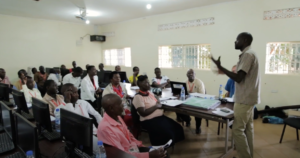


In May 2025, farmer-trainers, beekeepers, and development leaders gathered in Guatemala to explore stingless native bees and agroecology. Listening in the circle was Katalina Landaeta, newly appointed director of ECHO’s Central America & Caribbean (CAC) Regional Impact Center. The stories she heard that day of fragile soils, storm losses, and communities eager to learn from one another capture the heartbeat of this new center.
ECHO’s Central America & Caribbean Regional Impact Center exists to partner with smallholder farmers and development workers by sharing practical, sustainable options that help reduce hunger and improve livelihoods across the region. The Center received official Board approval in 2024 and began foundational work in January 2025 under Katalina’s leadership. From day one, the posture has been simple: listen first, build trust, then co-create solutions that fit local realities.
The CAC team first focused on relationship-building and collaborative learning to ground the work in regional priorities. Across Guatemala, Honduras, and Nicaragua, ECHO organized four national gatherings that brought together approximately 50 organizations and leaders in each country.
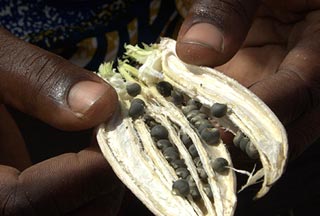
Through facilitated dialogue, participants surfaced shared agricultural and food security challenges, co-developed collaborative training agendas with local practitioners, and began laying the groundwork for future seed banking efforts to strengthen adaptive agriculture. Each event helped knit together relationships that will carry this work forward.
Central America and the Caribbean face overlapping vulnerabilities, climate shocks, fragile food systems, and resource constraints, yet communities remain resilient and innovative. Public health and development data paint a clear picture of both need and opportunity:
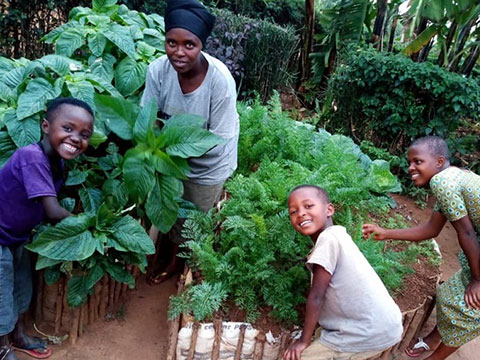
In 2022, 7.2 million people in the Caribbean experienced hunger, and more than 60% of the region’s population faced moderate or severe food insecurity. (PAHO) At the same time, the area is routinely battered by weather extremes, with an average of eight tropical storms or hurricanes striking each year. (CEPAL) Agriculture is overwhelmingly small-scale: about 70% of farmland is managed by smallholders. (FAO) These are precisely the farmers ECHO seeks to encourage—with context-appropriate innovations they can test, adapt, and share.
Climate variability, degraded soils, and market instability mean farmers need options that work under stress. Evidence shows climate-smart farming practices can increase yields by 30–50%. (World Bank) Through the CAC RIC, ECHO is investing in the support that helps these practices take root:
- Strategic partnerships that connect local organizations, technical experts, and community leaders.
- Regionally relevant resources, including Spanish-translated technical notes, so knowledge is usable where it’s needed.
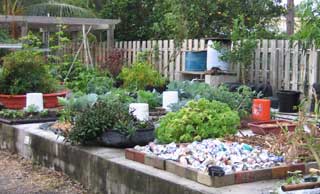
- Planning for a Small Farm Resource Center to provide demonstration plots, seed access, and hands-on learning.
- Continued network gatherings that accelerate farmer-to-farmer exchange across borders.
Resilience builds fastest when solutions are discovered, owned, and multiplied locally.
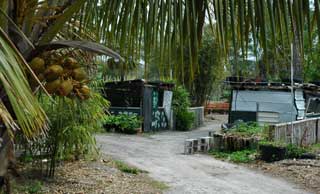
Central America contains 12% of the world’s biodiversity on just 2% of its land area. (IUCN) That ecological richness is more than a fun fact; it’s a wellspring for agroecological innovation. Diverse species, traditional knowledge, and locally adapted crops give smallholders tools to weather climate shocks, restore soils, and diversify income.
Katalina Landaeta leads the CAC RIC with a passion for farmer-led innovation and participatory research. She holds a B.S. in Environmental Sciences from Simón Patiño University in Bolivia and a M.S. in Fundamentals & Practices in Sustainability from the University of Lausanne in Switzerland.
She is an environmental scientist with hands-on experience in agroecological projects and resilience missions in Bolivia, Colombia, and Angola. Her cross-cultural fieldwork and commitment to elevating farmer knowledge make her well-suited to guide a regionally rooted, collaborative approach.
What’s Next
With relationships forming and collaborative agendas underway, the CAC RIC will continue:
- Deepening country partnerships and practitioner networks.
- Advancing seed banking groundwork and resource sharing.
- Expanding Spanish‑language technical materials and training opportunities.Preparing the Small Farm Resource Center concept for the region.
Whether you directly serve farmers, support development programs from afar, lead a church or community initiative, or simply care about resilient food systems, you can help strengthen this work. When you partner with ECHO through collaboration, advocacy, or financial support, you equip local leaders with practical, sustainable options that reduce hunger, improve livelihoods, and steward one of the most biodiverse regions on earth.
Stay connected with ECHO for progress updates, region-specific resources, and future opportunities to engage as the Central America & Caribbean Regional Impact Center grows.
