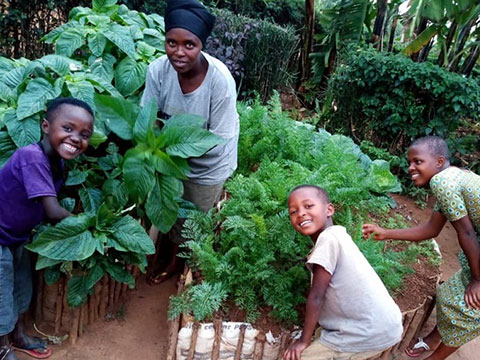
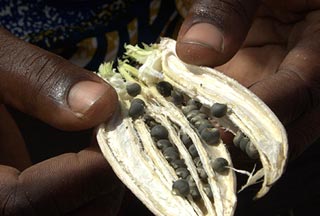



Access to locally appropriate seeds can mean the difference between hunger and harvest for families around the world. Through ECHO’s global network, seed systems are being strengthened to protect biodiversity, improve food security, and help communities grow their resilience.
Seed banking and seed saving have long been part of ECHO’s ministry. Across climates and cultures, our teams study, test, and refine these methods to help small-scale farmers access reliable, locally adapted seed. Below are some of the most common questions we receive about seed banks and how they help communities flourish.

What is a seed bank?
A seed bank is a place where seeds or other plant material are stored for future use. It serves farmers, gardeners, crop breeders, and researchers who want to conserve valuable plant varieties.
Seed banks can vary widely. Some store small quantities of many species to preserve diversity, while others hold larger quantities of a few important crops. Depending on local resources, they may range from high-tech cold storage facilities to simple, community-built structures made with local materials.
Why does ECHO focus on community seed banking?
Community seed banks are locally managed seed systems that help farmers conserve, multiply, and share important plant varieties suited to their own environments.
ECHO focuses on strengthening these systems because they offer practical solutions to several global challenges. As many countries tighten seed movement across borders, communities need reliable local seed sources. By investing in community-led seed systems, ECHO helps ensure that farmers can:
-
Respond quickly after crises such as droughts or floods.
-
Preserve traditional and regionally adapted crops.
-
Strengthen community self-reliance and reduce dependence on outside suppliers.
This work connects directly with ECHO’s Global Goal #3: Advancing Global Seed Banking, which supports local biodiversity and food security worldwide.
What does a community need to start a seed bank?
Every successful community seed bank begins with collaboration, commitment, and shared purpose. From there, several key elements help ensure success:
-
Local leadership and community recognition.
-
Funding for materials, training, and storage facilities.
-
Infrastructure suited for seed storage such as underground cisterns, earthbag structures, or cool rooms.
-
Training in seed saving, purity maintenance, germination testing, and recordkeeping.
-
A system for tracking seed lots and performance data.
-
Proper containers and moisture-control tools such as desiccants or vacuum sealing.
-
Agreed distribution and regeneration methods to keep the seed system active and sustainable.
With these building blocks, communities can safeguard their seed diversity for future generations.
What are the key functions of a community seed bank?
A healthy seed bank is more than a storage space. It is a center for knowledge sharing, cooperation, and resilience building. Common functions include:
-
Preserving local and indigenous seed varieties.
-
Managing, storing, testing, and distributing seed collections.
-
Coordinating seed fairs and exchanges to promote diversity.
-
Providing seed relief after disasters or crop loss.
-
Supporting cooperation and peacebuilding through shared stewardship of resources.
Some seed banks also maintain other planting materials, such as sweet potato cuttings, banana pups, or chaya stems, ensuring farmers have access to a range of crops that meet both food and nutrition needs.

Do farmers have to pay for seeds from ECHO’s seed banks?
ECHO provides ten free variety trial seed packets each year to individuals or organizations working with small-scale farmers. Each packet contains enough seed to plant a 30-foot row of a crop. Additional seed, along with documents that prove seeds are safe and pest free (phytosanitary certificates) for countries that require them, can be purchased through ECHO’s seed banks.
Farmers and organizations can visit ECHOcommunity.org to request seed and connect with their nearest Regional Impact Center for guidance and support.
How are seeds stored for long periods in harsh climates?
Seeds are living organisms that require careful handling to stay viable. At ECHO, seeds are dried thoroughly to reduce moisture and pest risk. They are then sealed in airtight containers with desiccants and stored in cool environments.
Every six to twelve months, ECHO teams test small samples from each seed lot to check germination rates. If the rate falls below acceptable levels, staff review storage conditions and regenerate the seed through new plantings to keep the collection strong and healthy.
How can my donation support ECHO’s seed banks?
Your support helps ECHO share thousands of seed packets each year with global partners and farmers in need. Each packet represents more than seed—it represents food, opportunity, and hope.
Through your generosity, families can grow nutritious crops, preserve their local seed heritage, and pass abundance on to others in their communities.
Want to learn more about seed banking? Explore ECHO’s seed resources and training opportunities at ECHOcommunity.org.
Ready to partner with ECHO in this important work? Join us at echonet.org/give.