Growing Beyond Free Seeds: The Importance of Community Seed Banks From Trial Packets to Local Food Security

What happens when development workers, farmers, and communities collaborate to save and share their most successful seeds? Food security takes root, independence grows, and resilience blossoms for generations.

ECHO has been delivering free trial seed packets through its Regional Impact Centers (RICs) across Africa, Asia, the Americas, and beyond for decades. These packets help farmers test nutritionally rich crops that are climate resilient and culturally relevant to their local needs. But a single packet is often just the beginning.

As these crops succeed, communities take the next step by saving their own seeds and beginning to establish their own community seed banks, so the benefits multiply far beyond the trial phase.

What is a Community Seed Bank?

A community seed bank is a locally managed collection of seeds maintained by and for the community. Unlike commercial seed systems, these banks focus on preserving agricultural biodiversity, protecting Neglected and Underutilized Species (NUS), and ensuring smallholder farmers have dependable access to high-quality seeds adapted to their environment.

Community seed banks:

  • Preserve traditional and local seed varieties vital to the community’s culture and diet
  • Reduce dependency on buying seeds from outside suppliers
  • Help crops withstand climate shocks and changing weather patterns
  • Put seed decisions back into farmers’ hands
  • Keep seeds accessible to everyone, including the most vulnerable

Why They Matter Now More Than Ever

Community seed banks close that gap in regions where commercial seed systems can’t or won’t serve smallholder farmers. Because the seeds are often saved from the best-performing local crops, they are better suited to the conditions farmers face—drought in East Africa, flooding in Southeast Asia, or poor soils in Central America.

Seed Banks at ECHO’s Regional Impact Centers include:

  • East Africa: What started in 2014 with just two dozen seed samples is now 816 accessions, distributing over 30,000 packets in ten countries from 2022 to 2024. Many banks are run by women graduates of ECHO’s Seed Bank Manager Trainings—women who now lead local networks, multiplying both seeds and impact.
  • West Africa: ECHO’s community seed bank (banque de semences communautaire) was established in 2024. It preserves and multiplies farmer-managed seeds such as maize, okra, millet, and sorghum. By the end of 2025, 30 varieties will have been cataloged, contributed by farmers who save and share seeds from their harvests. Traditional practices of storing seeds in granaries, jars, or barrels, often with ash or neem leaves for protection, are strengthened through ECHO’s trainings, cleaning, trial plantings, and multiplication efforts. As producers learn to establish their own seed banks, local biodiversity and resilience will grow across the region.
  • Asia: Since 2009, ECHO Asia’s seed bank has grown from 170 initial samples to more than 500 accessions. Farmers from Laos to Myanmar now plant crops once nearly forgotten—restoring biodiversity and strengthening nutrition one harvest at a time.
  • Central America & the Caribbean: Community Seed Banks (known in CAC as “seed reservoir/reservorio de semillas” or “seed house/casa de semillas”) preserve Indigenous and peasant varieties that might otherwise disappear due to restrictive seed laws or overreliance on imported hybrids.
  • North America: The Global Seed Bank at ECHO Florida supplies the Free Trial Seeds program and conducts variety trials, sharing results with practitioners worldwide, often as far as Timor Leste in the South Pacific!

A Story of Multiplication: Amaranth in Guatemala

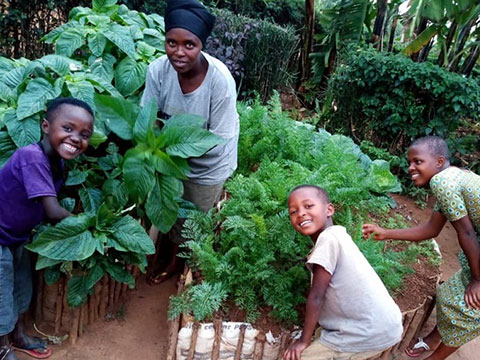
Sometimes, a seed bank’s legacy can be measured in decades. In 2001, Tara Cahill of the Cloud Forest Conservation Community in Guatemala took home a small packet of Mexican Grain Amaranth from ECHO’s seed bank in Florida. She planted it in Alta Verapaz for use in school and family gardens.

Twenty-four years later, Tara is still planting, multiplying, and sharing those same seeds. Amaranth, a nutrient-rich ancient grain, now grows in fields and gardens across the region—supporting healthier diets, better soils, and stronger communities.

“I have been planting, multiplying, and enjoying them for twenty-four years straight,” Tara says

This is a true testament to the enduring power of a single shared seed.

From Free Seeds to Seed Sovereignty

ECHO’s Free Trial Seeds program often sparks the creation of community seed banks—but it doesn’t stop there. We also:

  • Provide hands-on training for seed bank managers in harvesting, cleaning, and storing seed for long-term viability.
  • For nearly 10 years, we have facilitated opportunities for active seed bank managers to gather to share practical experiences, discuss operations challenges, and discuss strategies for consolidation and support.
  • Share low-cost storage innovations, like the bicycle-powered vacuum seed dryer in Thailand.
  • Produce multilingual training videos and books, such as Community Seed Bank Options, to guide others in starting their own local seed systems.

These initiatives ensure farmers aren’t just recipients of seeds; they become stewards, trainers, and innovators in their own right.

Ready to Start or Support a Community Seed Bank?

Visit ECHOcommunity.org for free resources on:

  • Seed-saving techniques for tropical and challenging climates
  • Guides for establishing a community seed bank
  • Best practices for storing seeds where pests, heat, and humidity are challenges

Helping Communities Own Their Futures

When communities own their seed systems, they own their future. What begins with a handful of seeds, shared freely, can grow into a lasting source of health, resilience, and hope for generations.

Measuring What Matters: Global MEAL Symposium Sparks Collaboration and Innovation

On July 7–9, ECHO Asia’s Impact Center in Chiang Mai became a vibrant hub for collaboration and learning as leaders from 16 organizations, from grassroots NGOs to top research teams, gathered for the Global Holistic MEAL Symposium. Their shared goal was to explore how Monitoring, Evaluation, Accountability, and Learning (MEAL) can help drive holistic development across communities.

This event showed the power of ECHO as a convening organization,” reflected Gerrianne, ECHO’s new MEAL lead. “We’re not just collecting data, we’re building trust, sharing lessons, and multiplying impact.”

A Space for Shared Learning

The symposium started with a lively “World Café” where participants shared their MEAL journeys, including the challenges, successes, and lessons learned. Case studies spotlighted practical tools, from qualitative partner assessments to FAO’s Tool for Agroecology Performance Evaluation (TAPE), and innovative data models to track change over time. A key theme rang clear: strong MEAL practices let organizations focus on what truly makes a difference in people’s lives, fostering shared growth and community impact.

One attendee summed it up:
“I feel less alone now. No matter our organization’s size, we share the same challenges.”

Co-Creating Solutions

Day two moved to a collaborative charrette, with teams tackling urgent MEAL priorities: defining the right metrics, ensuring data quality, and designing actionable implementation. The session generated real-world strategies and best practices to be shared in an upcoming ECHO white paper, reflecting vibrant collective innovation.

Trust-Based Philanthropy: A Convergence of Trust, Stories, and Impact

On the final morning, a panel on trust-based philanthropy highlighted how stories, statistics, and organizational trust go hand in hand. The discussion featured Scott Sabin, President of Plant With Purpose, who shared how his organization grew from tracking impact for five families in the Dominican Republic to comprehensive evaluations across all families served. It was a shift that revealed fuller stories of success and opportunity.

Without knowing how we’re doing, we can’t do anything with confidence,” Sabin explained. “While MEAL is sometimes viewed as optional, it’s actually the compass that guides our organization.” Plant With Purpose’s commitment to meaningful impact measurement propelled growth from $5M in revenue in 2020 to $14M in 2025, a change Sabin attributes to major donors prioritizing measurable results.

Participants reflected on key takeaways, identified barriers to implementing trust-based philanthropy, and committed to action steps in their own contexts.

The event closed with a farewell dinner on the banks of the Ping River, a fitting end to three days of connection, reflection, and vision-casting.

Why Collaboration Matters

Beyond the workshops and panels, the symposium deepened a spirit of belonging and encouragement. One participant shared:

“This was a fruitful time of learning. It’s challenged us to keep revising and improving our MEAL program.”

For Gerrianne, the experience confirmed:
“We can learn from the mistakes and replicate the successes of brilliant organizations around the table and begin this journey filled with motivation and inspiration.”

Looking Ahead

The conversations and connections sparked in Chiang Mai will continue through the release of the symposium whitepaper, future training opportunities, and ongoing collaboration across the network.

At ECHO, we believe measuring what matters is more than collecting data. It’s about listening, learning, and walking alongside communities to co-create lasting change.

Interested in learning more? Visit ECHOcommunity.org for access to resources, new research, and upcoming event announcements.

From Hard Soil to Hope: Inside ECHO’s West Africa Impact Center

West Africa carries some of the world’s heaviest burdens of rural poverty and food insecurity. In that challenge, ECHO’s West Africa Impact Center in Ouagadougou, Burkina Faso, has become a beacon quietly equipping those who serve smallholder farmers with practical, low-cost options that restore land, strengthen harvests, and open doors for holistic ministry. 

Through resource centers, on-farm demonstrations, and hands-on training, thousands of farmers, development workers, and church partners across the region are learning sustainable practices that improve food security and family livelihoods.

What does that look like on the ground? Meet Adama Boro. He joined an ECHO sustainable agriculture training in March 2024 and returned home determined to try what he’d learned about improved planting methods and biofertilizers suited to his context. When his 2025 corn harvest came in, it was so abundant that neighbors whispered about witchcraft. Adama knew better. The increase came from better stewardship of the soil, and it gave him an unexpected opening to talk about hope, change, and the truth of the Gospel.

“I have never had such a production before,” he says. “With ECHO’s techniques, we can make an agricultural revolution in Burkina.” 

Training participants across the region are discovering that even in harsh conditions, crops can thrive when conservation-focused methods like those taught in Foundations for Farming protect soil, conserve moisture, and manage fields with care. Improvements stack over time: healthier soil, steadier yields, and more margin for families living close to hunger.

And hunger remains a pressing reality. An estimated 58% of Africa’s population, roughly 300 million people, faces moderate to severe food insecurity. Every improved field matters.

Robert Sanou, founding director of ECHO West Africa, is guiding this long-term effort. Based in Burkina Faso, Robert has spent more than a decade building the Center and previously led the multi-sectoral development organization ACCEDES for 15+ years. With advanced degrees in project management and law, fluency in French and English, and extensive regional consulting experience, he brings a deep commitment to empowering communities across West Africa.

Want to learn what’s working? ECHO regularly shares West Africa field updates, practical “how-to” resources (in French & English), training opportunities, and stories like Adama’s that you can apply in the places you serve. Learn more and stay connected on ECHOCommunity.org and sign up for ECHO News to receive the latest tools and updates on our work ending hunger around the world.

Celebrating ECHO’s Newest Regional Impact Center (RIC)

In May 2025, farmer-trainers, beekeepers, and development leaders gathered in Guatemala to explore stingless native bees and agroecology. Listening in the circle was Katalina Landaeta, newly appointed director of ECHO’s Central America & Caribbean (CAC) Regional Impact Center. The stories she heard that day of fragile soils, storm losses, and communities eager to learn from one another capture the heartbeat of this new center.

ECHO’s Central America & Caribbean Regional Impact Center exists to partner with smallholder farmers and development workers by sharing practical, sustainable options that help reduce hunger and improve livelihoods across the region. The Center received official Board approval in 2024 and began foundational work in January 2025 under Katalina’s leadership. From day one, the posture has been simple: listen first, build trust, then co-create solutions that fit local realities.

The CAC team first focused on relationship-building and collaborative learning to ground the work in regional priorities. Across Guatemala, Honduras, and Nicaragua, ECHO organized four national gatherings that brought together approximately 50 organizations and leaders in each country.

Through facilitated dialogue, participants surfaced shared agricultural and food security challenges, co-developed collaborative training agendas with local practitioners, and began laying the groundwork for future seed banking efforts to strengthen adaptive agriculture. Each event helped knit together relationships that will carry this work forward.

Central America and the Caribbean face overlapping vulnerabilities, climate shocks, fragile food systems, and resource constraints, yet communities remain resilient and innovative. Public health and development data paint a clear picture of both need and opportunity:

In 2022, 7.2 million people in the Caribbean experienced hunger, and more than 60% of the region’s population faced moderate or severe food insecurity. (PAHO) At the same time, the area is routinely battered by weather extremes, with an average of eight tropical storms or hurricanes striking each year. (CEPAL) Agriculture is overwhelmingly small-scale: about 70% of farmland is managed by smallholders. (FAO) These are precisely the farmers ECHO seeks to encourage—with context-appropriate innovations they can test, adapt, and share.

Climate variability, degraded soils, and market instability mean farmers need options that work under stress. Evidence shows climate-smart farming practices can increase yields by 30–50%. (World Bank) Through the CAC RIC, ECHO is investing in the support that helps these practices take root:

  • Strategic partnerships that connect local organizations, technical experts, and community leaders.
  • Regionally relevant resources, including Spanish-translated technical notes, so knowledge is usable where it’s needed.
  • Planning for a Small Farm Resource Center to provide demonstration plots, seed access, and hands-on learning.
  • Continued network gatherings that accelerate farmer-to-farmer exchange across borders.

Resilience builds fastest when solutions are discovered, owned, and multiplied locally.

Central America contains 12% of the world’s biodiversity on just 2% of its land area. (IUCN) That ecological richness is more than a fun fact; it’s a wellspring for agroecological innovation. Diverse species, traditional knowledge, and locally adapted crops give smallholders tools to weather climate shocks, restore soils, and diversify income.

Katalina Landaeta leads the CAC RIC with a passion for farmer-led innovation and participatory research. She holds a B.S. in Environmental Sciences from Simón Patiño University in Bolivia and a M.S. in Fundamentals & Practices in Sustainability from the University of Lausanne in Switzerland.

She is an environmental scientist with hands-on experience in agroecological projects and resilience missions in Bolivia, Colombia, and Angola. Her cross-cultural fieldwork and commitment to elevating farmer knowledge make her well-suited to guide a regionally rooted, collaborative approach.

What’s Next

With relationships forming and collaborative agendas underway, the CAC RIC will continue:

  • Deepening country partnerships and practitioner networks.
  • Advancing seed banking groundwork and resource sharing.
  • Expanding Spanish‑language technical materials and training opportunities.Preparing the Small Farm Resource Center concept for the region.

Whether you directly serve farmers, support development programs from afar, lead a church or community initiative, or simply care about resilient food systems, you can help strengthen this work. When you partner with ECHO through collaboration, advocacy, or financial support, you equip local leaders with practical, sustainable options that reduce hunger, improve livelihoods, and steward one of the most biodiverse regions on earth.

Stay connected with ECHO for progress updates, region-specific resources, and future opportunities to engage as the Central America & Caribbean Regional Impact Center grows.

Hands-On Outreach

The Hope of a New Business

In Dédougou, trainings in market gardening inspired women to work together to earn extra income by producing and selling tomato paste made from the produce from their gardens. Madame Traoré, a pastor’s wife, learned about tomato paste and above-ground gardening and is helping her family and neighbors improve their nutrition.

Today, she trains women in her community and sells her tomato paste throughout the western region of Burkina Faso. She also shares the gospel to those she trains. Her income has increased, and she is happy to contribute to the development of women.

Life-changing Trainings

Terrorism, extreme weather, poverty, and historically poor land management leave West African farmers at a constant disadvantage.

However, in the midst of these trials, hope is shining through!

ECHO West Africa training teams have equipped over 3,392 men and women with practical agricultural skills that they can implement immediately to greatly improve harvests.

Internally displaced people groups, living in temporary camps and in desperate need, are being equipped with gardening skills to grow food in small spaces.

From Failing to Successful Gardens 

ECHO recently partnered with a local NGO to provide 10-day trainings for 564 people. These trainings in market gardening techniques and entrepreneurship are helping families improve their gardening production and boost their incomes.

Abigaelle Kini was one of the women trained. She and her husband have a small plot of land that they were farming, but they kept trying and failing, never quite knowing how to make it successful.

“After the training with ECHO, I learned how to make natural products to eradicate the worms from my garden,“ said Abigaelle. “My husband and I are teaching our children all that we have learned.”

Equipping to Multiply

ECHO‘s East Africa trainers connect with family farmers through community group and school trainings, radio broadcasts, agricultural fairs, and farmer field schools.

When borders closed due to COVID-19 restrictions, trainers took another look at communities within Arusha City and saw existing groups that would benefit from and multiply ECHO knowledge. Youth committees, savings cooperatives, women’s groups, and secondary schools learned about the nutrients available in perennial vegetables and the benefits of urban gardens.

“For me, this training has been an eye-opening experience. I am thankful that the training has come just right in time when we need it most, “ shared Mama Abdul from Arusha. 

Creating Future Incomes

Appropriate technology and creative capacity building have equipped innovators to solve problems in their own villages leading to the creation of ongoing small businesses and custom, innovative farm implements.

Healthy Hillsides Support Healthy Crops

Tree seedlings and contour ditches in hillsides are investments in a healthy future! The team in East Africa has helped farmers cooperatively dig thousands of meters of erosion control contours and planted more than 24,000 indigenous seedlings to conserve precious hillsides. These hills are at risk of severe erosion leading to decreased soil nutrients and agricultural loss.

The team in East Africa has helped farmers cooperatively dig thousands of meters of erosion control contours and planted more than 24,000 indigenous seedlings to conserve precious hillsides. These hills are at risk of severe erosion leading to decreased soil nutrients and agricultural loss.

Simple Solution, Life-Changing Result

While Thailand is a peaceful country, neighboring regions have been challenged by civil war and violence. Internally displaced people live in long-term camps without access to many basic sanitation options. The ECHO Asia team realized that one of the most effective ways they could serve those struggling with contaminated drinking water was to teach and multiply the knowledge of simple biosand water filters.

Still limited by COVID protocols, the ECHO Asia team conducted a workshop that taught the principles and practices that participants would need to know to build their own 300-liter affordable biosand water filters. Again, the technology is the mechanism, but the real impact is evident in the lives of the people. Shortly after the training concluded, ECHO Asia trainers received an email with a simple message: “You trained us well and now we are blessing many people near the Myanmar border!”

One man, trained at ECHO’s small farm resource center in Chiang Mai, returned home and gathered men from his village. Together they constructed a 300-liter water filtration system from locally available resources and installed it in a few days. Through their work, a brand-new biosand water filter is providing clean water to a rural village in northern Thailand for villagers and refugees alike. 

This is the power of the ECHO effect. Your support helps to multiply one training into many other trainings — through those we train sharing what they learned — and many people benefit.

Seed Saving: Not Just a Tradition

By: Makenzi Johnson

In 1981, Dr. Martin Price saw that there was a lack of access to seeds of underutilized tropical food plants, a need that was already felt all over the world by small-scale farmers. To meet this need, the first ECHO Seed Bank was born. Forty years later, providing seeds of underutilized and neglected crops to small-scale farmers, development workers, and missionaries has remained one of ECHO’s main priorities.

What started as a humble collection of seeds on ECHO’s campus in Florida, has grown into a worldwide source of impact.

The first intern Dr. Price selected after he arrived at ECHO was Elise Hansen Tripp. She shared the bottom floor of an A-frame house with an office and a start at a collection of relevant books. Seeds that were little known at the time were collected and grown on the original five-acre property. Dr. Price, his wife Bonnie, and Tripp started storing seeds in Tripp’s refrigerator, which was the first Seed Bank. Only the three of them were there to sort and store the first varieties of seed by hand, but they made it work.

“I remember harvesting the seeds and putting them into envelopes,” Tripp said. “We talked about how to store seeds well, and that ‘we’re going to need some seed storage in the future.’”

In the late 1990s, the Seed Bank was growing to be too large for the refrigerator in the A-frame. A donation made it possible for ECHO to receive a larger capacity refrigerated storage container to properly house the seeds.

A climate-controlled area is one of the factors in storage that help best preserve the thousands of seeds ECHO holds. Other factors include pest control, appropriate containers, and annual germination testing. ECHO’s storage facilities are kept at 45 degrees Fahrenheit with 45% humidity, airtight containers are used for the storage of seeds, and germination testing is done annually to determine if a specific batch of seeds is still able to be used and sent out.

In 2002, ECHO purchased a neighboring property and acquired the garage that has now become the Seed Bank. The storage container was attached to the garage, making space for seed packaging and offices.

Forty years from the first Seed Bank, staff and volunteers are still sorting seeds by hand to carefully preserve, package, and send them out throughout the world. A large walk-in refrigerator, a processing and packing room, and more office space allow for ECHO to do more with seed banking training, dozens of volunteer sorters, and germination testing.

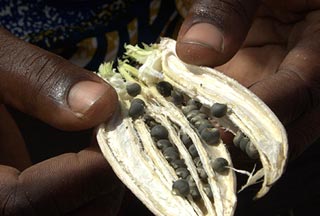
ECHO now also has regional seed banks which act as genetic banks for many varieties of underutilized seeds, depending on what seeds are appropriate for the geographical area. Each year, development workers can request ten packets of seeds for free. The ten packets help farmers test out the various crops, and those seeds bring substantial change.

“People have received one seed packet of moringa with just ten seeds, and that crop spreads throughout the community just from the one seed packet… it’s a small thing that has a huge impact,” Holly Sobetski, ECHO’s Florida Seed Bank manager, said.

Seed saving is taught so farmers can store their own seeds while being able to control pests and increase the viability of their seeds for future planting seasons.

“We want them to be self-sufficient and sustainable,” Sobetski said, “as much as we can teach people how to do this on their own, it’s going to help them.”

ECHO seed banks have been around for 40 years and have grown to meet the needs of those it serves. Across cultures and continents, the mission and goal of the seed banks have remained the same — to preserve seeds of underutilized crops for the benefit of small-scale farmers.

With improved seed saving, a farmer can improve their health and nutrition, increase their profit at the market, and ultimately increase their livelihood for years to come.

Equipping Farmers in North Africa

By: Makenzi Johnson

For years after first hearing about ECHO from a friend, Kimberly Duncan went through life with the thought of the ECHO internship in the back of her mind. She was looking for a program that would give her hands-on training and the practical skills in agriculture she was looking to take abroad to a field of service.

Ten long years after having completed her bachelor’s degree, Duncan volunteered as a resident student researcher at ECHO serving for two weeks and applied for the year-long internship afterward. Duncan was accepted and became the urban garden intern in the fall of 2009.

ECHO trainings proved to be exactly what she was looking for, and Duncan was given daily opportunities to roll up her sleeves and get her hands dirty.

“It was always interactive; the staff was willing to let you experiment and try things even if it meant possibly messing something up,” Duncan said. “ECHO taught me to be less afraid of failure.”

Now Duncan is in North Africa working with an agricultural organization to encourage farming families with a more practical understanding of their assets. She works with families struggling with soil degradation who lack regular access to resources, seeds, water, and training. Over and over again, she emphasizes that the confidence that she gained during her internship at ECHO impacts how she approaches her work now.

Regularly, Duncan is interacting with teams of students and farmers. She reflects on how ECHO’s community and the network have shown her the importance of supporting each other and sharing ideas.

“For myself and a lot of my American colleagues, we can be tempted to think in a very autonomous way. We might believe that we can do things on our own and don’t need help,” Duncan said. “And while independence is valuable, you need a community to better serve one another… it makes you 100 times stronger than if you are on your own.”

ECHO’s network has been a constant encouragement for Duncan during her four years of working in North Africa. Because of her time at ECHO, Duncan gained more knowledge and practical experience than she could have ever hoped for.

“ECHO’s approach is to help build capacity in the people with whom they partner,” Duncan said. “ECHO cares about encouraging and sharing hope with others, and I continue to use them as a model here where I work day-to-day.”

Inspiring seed banks in Myanmar

By: Joan CooperRusek

The enriching and life-sustaining impact ECHO has on people’s lives reverberates throughout the world. The knowledge, training, and resources provided at just one workshop through ECHO Asia and its partners in one Southeast Asian nation are helping to improve the success of farmers across the region. In one particular instance, ECHO tools and training were implemented to sustain the lives of 300 orphans in a neighboring country.

Youthful Myanmar farmer Saw Shiesho speaks with the poise and wisdom of someone twice his age. Interviewed at just 19 years old, his great enthusiasm and thirst for knowledge for his mission clearly shine through. He became a farmer at age 17 and works the land at Full Moon, an orphanage to the north of Yangon, one of the region’s larger cities. He starts his day at 6 a.m. and tends to the plants by hand, watering, fertilizing, and harvesting. In the evening, he again waters the crops using a hose and system of connected pipes leading to a well.

“In general, young people in Myanmar are not that interested in working in agriculture,” he laments. “But I am. I want to improve the way farming is done here. It is my mission.”

Saw recognizes the benefit of improving both the quality and the quantity of the food and is very proud that they use organic fertilizers such as leaf compost, animal manure, and lime along with natural pesticides, such as chilies, ginger, and galangal, a spicy root plant.

“Chemicals can have side effects and are not good for people,” he explained. By Joan CooperRusek ECHO News 3 Summer 2022 The Full Moon farm has the primary purpose of feeding approximately 300 needy children living at the orphanage there. Good harvests producing extra crops are sold at the local market and provide income and revenue opportunities.

Saw had the opportunity to attend a program presented by ECHO Asia in neighboring Thailand in the fall of 2019. He brought back and enthusiastically applied his new knowledge and skills to the farm at Full Moon.

“ECHO taught us new methods to improve our farm and how to build a seed bank,” he said. “It will have 200 kinds of seeds we will use on the farm to grow crops.”

The seed bank storage facility was constructed of bamboo and insulated with mud to reduce the impact of the local climate’s heat and humidity.

“We should have air-conditioning, but we do not have the funds for that,” he explained.

He said initially the farm is keeping and storing all the seeds it receives in their seed bank, but, they will be able to share them with others in the future and pass along the knowledge and skills they learned at the ECHO Asia Small Farm Resource Center.

The orphanage is situated on a 70-acre farm in Phugyi Village in Hmawbi Township. The orphanage is part of the Lapyiwun Children Development Family (LCDF), which began caring for about 80 children affected by landslides and conflicts in the Mon State and Karen State regions of Myanmar in 1998. Two years later it moved to its current location. In 2002 LCDF was one of the first children’s homes in Yangon to receive government approval and registration.

Full Moon was founded by U Ba Hla Tin Htoo, who developed the land for growing food and raising livestock to achieve self-sufficiency ,and teach life skills to the orphaned children. A demonstration farm established later provides tourism opportunities for others to visit. Full Moon also implements programs in the orphaned children’s former villages and it works with them on projects to boost economic opportunities and create jobs.

ECHO Asia’s relationship with Full Moon dates back prior to May 2017, when Full Moon staff attended a work-study trip to the ECHO Asia Seed Bank in Mae Ai, Thailand. Since then, ECHO Asia representatives have visited the farm and provided training, support and ongoing consultations. Three Full Moon staff members completed a one-week intensive internship at the ECHO Asia Small Farm Resource Center in Chiang Mai, Thailand and brought that training home to share with their colleagues.

In working through our partners the ECHO Asia team has helped the people of Myanmar during some difficult years by providing encouragement, training, equipment, and resources such as seeds and cuttings for plant propagation. What began with one workshop held in Thailand has continued to bring needed knowledge and resources to Full Moon orphanage years later. The children there not only benefit from the increased harvest, but also the knowledge they can take with them into adulthood for continued success.