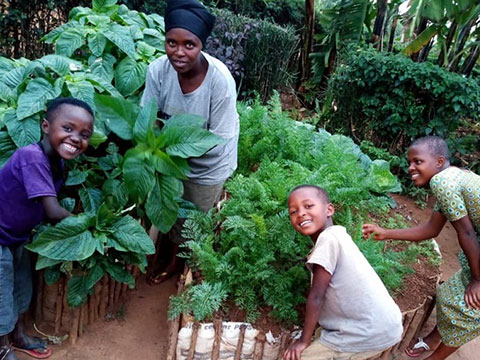
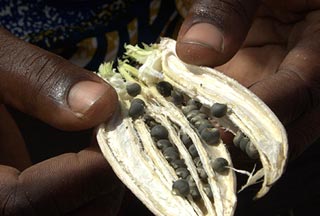
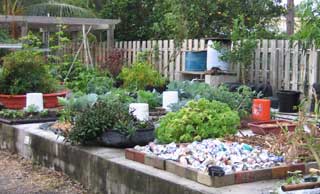



What happens when development workers, farmers, and communities collaborate to save and share their most successful seeds? Food security takes root, independence grows, and resilience blossoms for generations.
ECHO has been delivering free trial seed packets through its Regional Impact Centers (RICs) across Africa, Asia, the Americas, and beyond for decades. These packets help farmers test nutritionally rich crops that are climate resilient and culturally relevant to their local needs. But a single packet is often just the beginning.
As these crops succeed, communities take the next step by saving their own seeds and beginning to establish their own community seed banks, so the benefits multiply far beyond the trial phase.
What is a Community Seed Bank?
A community seed bank is a locally managed collection of seeds maintained by and for the community. Unlike commercial seed systems, these banks focus on preserving agricultural biodiversity, protecting Neglected and Underutilized Species (NUS), and ensuring smallholder farmers have dependable access to high-quality seeds adapted to their environment.
Community seed banks:
- Preserve traditional and local seed varieties vital to the community’s culture and diet
- Reduce dependency on buying seeds from outside suppliers
- Help crops withstand climate shocks and changing weather patterns
- Put seed decisions back into farmers’ hands
- Keep seeds accessible to everyone, including the most vulnerable
Why They Matter Now More Than Ever
Community seed banks close that gap in regions where commercial seed systems can’t or won’t serve smallholder farmers. Because the seeds are often saved from the best-performing local crops, they are better suited to the conditions farmers face—drought in East Africa, flooding in Southeast Asia, or poor soils in Central America.
Seed Banks at ECHO’s Regional Impact Centers include:
- East Africa: What started in 2014 with just two dozen seed samples is now 816 accessions, distributing over 30,000 packets in ten countries from 2022 to 2024. Many banks are run by women graduates of ECHO’s Seed Bank Manager Trainings—women who now lead local networks, multiplying both seeds and impact.
- West Africa: ECHO’s community seed bank (banque de semences communautaire) was established in 2024. It preserves and multiplies farmer-managed seeds such as maize, okra, millet, and sorghum. By the end of 2025, 30 varieties will have been cataloged, contributed by farmers who save and share seeds from their harvests. Traditional practices of storing seeds in granaries, jars, or barrels, often with ash or neem leaves for protection, are strengthened through ECHO’s trainings, cleaning, trial plantings, and multiplication efforts. As producers learn to establish their own seed banks, local biodiversity and resilience will grow across the region.
- Asia: Since 2009, ECHO Asia’s seed bank has grown from 170 initial samples to more than 500 accessions. Farmers from Laos to Myanmar now plant crops once nearly forgotten—restoring biodiversity and strengthening nutrition one harvest at a time.
- Central America & the Caribbean: Community Seed Banks (known in CAC as “seed reservoir/reservorio de semillas” or “seed house/casa de semillas”) preserve Indigenous and peasant varieties that might otherwise disappear due to restrictive seed laws or overreliance on imported hybrids.
- North America: The Global Seed Bank at ECHO Florida supplies the Free Trial Seeds program and conducts variety trials, sharing results with practitioners worldwide, often as far as Timor Leste in the South Pacific!
A Story of Multiplication: Amaranth in Guatemala
Sometimes, a seed bank’s legacy can be measured in decades. In 2001, Tara Cahill of the Cloud Forest Conservation Community in Guatemala took home a small packet of Mexican Grain Amaranth from ECHO’s seed bank in Florida. She planted it in Alta Verapaz for use in school and family gardens.
Twenty-four years later, Tara is still planting, multiplying, and sharing those same seeds. Amaranth, a nutrient-rich ancient grain, now grows in fields and gardens across the region—supporting healthier diets, better soils, and stronger communities.
“I have been planting, multiplying, and enjoying them for twenty-four years straight,” Tara says.
This is a true testament to the enduring power of a single shared seed.
From Free Seeds to Seed Sovereignty
ECHO’s Free Trial Seeds program often sparks the creation of community seed banks—but it doesn’t stop there. We also:
- Provide hands-on training for seed bank managers in harvesting, cleaning, and storing seed for long-term viability.
- For nearly 10 years, we have facilitated opportunities for active seed bank managers to gather to share practical experiences, discuss operations challenges, and discuss strategies for consolidation and support.
- Share low-cost storage innovations, like the bicycle-powered vacuum seed dryer in Thailand.
- Produce multilingual training videos and books, such as Community Seed Bank Options, to guide others in starting their own local seed systems.
These initiatives ensure farmers aren’t just recipients of seeds; they become stewards, trainers, and innovators in their own right.
Ready to Start or Support a Community Seed Bank?
Visit ECHOcommunity.org for free resources on:
- Seed-saving techniques for tropical and challenging climates
- Guides for establishing a community seed bank
- Best practices for storing seeds where pests, heat, and humidity are challenges
Helping Communities Own Their Futures
When communities own their seed systems, they own their future. What begins with a handful of seeds, shared freely, can grow into a lasting source of health, resilience, and hope for generations.



