


Help families move from barely surviving to thriving when you join the special ECHO Thrive Team. Your monthly gift ensures life-changing trainings and resources are available. For as little as $10 a month, you can make a lasting difference. Monthly giving is a convenient way to give and show you care – with powerful results.
Faithful stewardship. Real impact. Your gift helps transform lives around the world.
Across much of the world, hunger is not caused by
When agricultural lands are depleted or overgrazed, incomes dwindle and
By: Talia McWright
Soil health is key to growing crops that flourish and produce an abundance of food for communities. Dr. Tim Motis and his team at ECHO Florida have been testing bioliquid fertilizer to find out when to apply it. The team found that, with a recipe that includes plant material and manure, three is the magic number as nitrogen reached its highest level at the three-week mark. High levels of nitrogen are important because many farmers experience a deficiency of this nutrient in their soil. This is an example of discoveries, validated through research, that Dr. Motis and the ECHO team share with a global network of practitioners serving small-scale farmers.
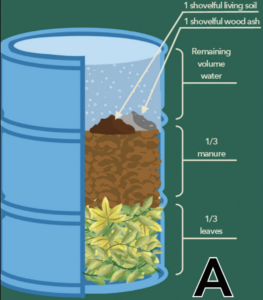
Originally identified in West Africa by a guest presenter at an event and shared with ECHO Florida, bioliquid fertilizer is a water-based fertilizer comprised mainly of nutrient-rich plants, manure, or both. Dr. Motis’ team has evaluated three recipes, all of which include water as well as leaves and young stems of a plant called Tithonia (Tithonia diversifolia, also known as Mexican Sunflower). One of the recipes is just water and Tithonia while the others include manure and/or “living soil” (soil with lots of microbial life) and wood ash. Other high-nutrient plants could potentially be substituted for Tithonia for similar results. Whereas compost requires careful attention to temperature and the turning of piles, the bioliquid fertilizer that Dr. Motis has been working with simply requires a few minutes of stirring each day.
The team collected samples of the bioliquid fertilizer over an 11-week period, on a weekly basis for the first several weeks, and then biweekly. The fertilizer samples were sent to a laboratory for analysis of nitrogen and other nutrients plants need. Results were then graphed to show how many weeks, after mixing up all the ingredients, it takes for the nutrients to reach their highest levels. Test results showed that nitrogen levels peaked at the two-to-three week mark, whereas levels of other nutrients reached their highest levels between the third and fifth week. Results showed that the best time to apply bioliquid fertilizer depends on the recipe and on what nutrients the farmer wants to prioritize.
Motis and his team are sharing results with the other Impact Centers so that they can be disseminated around the world. “With this knowledge, farmers will be able to decide when to apply bioliquid fertilizer based on the recipe they are using and the nutrients their plants need most,” Dr. Motis said.
Farmers with no access to manure can still make biofertilizer with just plant waste alone or in combination with “living soil” and wood ash. ECHO research findings not only showed when to apply bioliquid fertilizer but also the differences in nutrient levels provided by different recipes. If a farmer uses a recipe that is less nutrient-rich than another recipe, she/he will know to compensate by applying that recipe at a higher rate.
“There’s no simple technique to solve every plant problem,” Dr. Motis said. “There’s no silver bullet, but this is a practical option in a farmer’s toolbox.”
One downside of bioliquid fertilizer is its weight. It could be tiring to carry and apply a heavy liquid over large fields. A method used by ECHO Florida staff, that overcomes the problem of weight, is called fertigation. With the turning on of a valve, the bioliquid is quickly distributed directly to the plants through drip irrigation lines.
Dr. Motis’ team continues to explore nuances and options related to bioliquid fertilizer. Findings by Dr. Guin Perry, for instance, are showing the importance of wood ash in stabilizing the pH of the fertilizer, an important factor influencing the ability of plants to take up nutrients. She is also exploring an approach to making bioliquid fertilizer that eliminates the need for daily stirring. ECHO researchers hope to provide a range of on-farm fertilizer options that farmers can implement themselves to positively impact their communities by meeting hunger needs. The results will empower farmers to experiment, encouraging their communities to do the same.
Taking this validated research back to West Africa gives the team even more confidence in the practices that they teach.
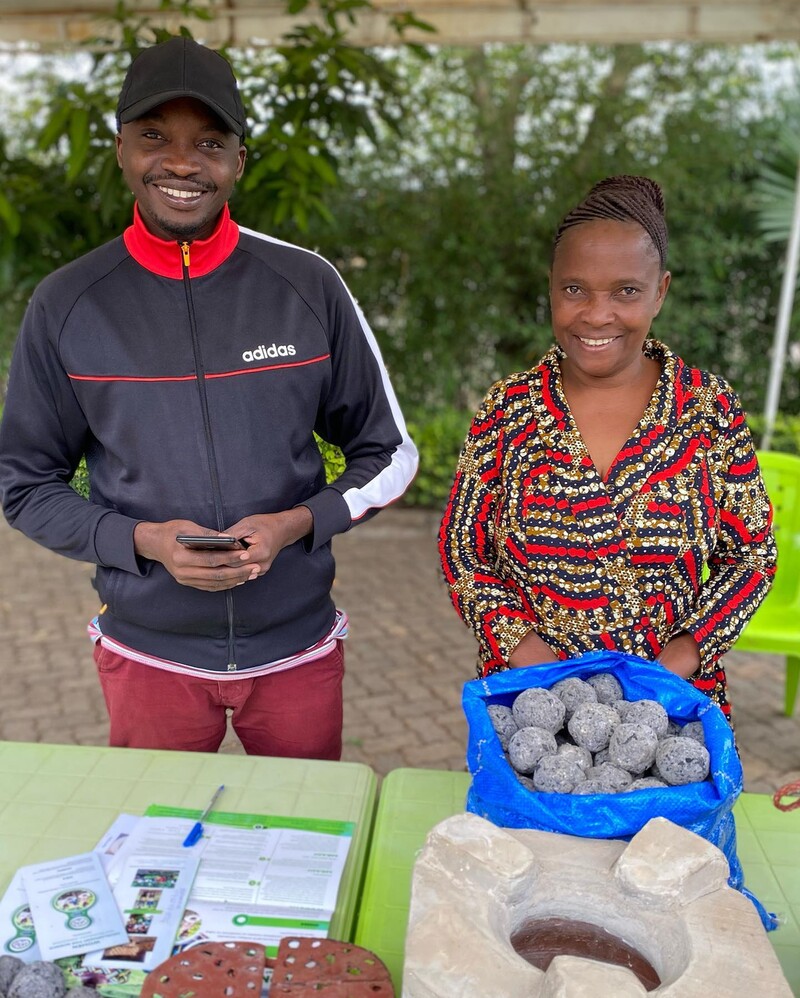
At ECHO’s Appropriate Technology Symposium, Clement Mzinga and Rehema Onesmo of Women Development for Science and Technology Association (WODSTA) demonstrated the Portable Cement Stove, Wonder Basket Stove, and briquettes made and promoted by their organization to inspire others to make their own.
Made with agricultural waste, green biomass charcoal does not release the smoke and carbon dioxide that the conventional briquettes emit when burned and is gaining popularity in the East African country, where 80% of residents rely on wood and coal to cook their meals, according to the national statistics bureau.
These spheres can be used as an alternative to other fuels such as coal and oil, both in household uses, and for heat, which recycles, reduces fuelwood deforestation, reduces costs and creates economic opportunities, improving lives!

By: Ella Roberts, Storytelling Intern
When he was 15 years old, missionaries in Likamba village begged Pastor Elirehema to feed their digester so that they would have methane to cook with. After that, he told himself one day, I’m going to have one of my own. For years he was convinced it was not possible. He thought it would cost too much, he wasn’t knowledgeable on the process, and he wouldn’t be able to maintain it. However, three years ago, at the age of 57, Pastor Elirehema received his own digester. His dream had finally come true.
For many, their dreams might not look like those of Elirehema. But for him and others in the Maasailand of Tanzania, having access to a biogas digester would save time, and money, and increase crop productivity and yield.
This is just one example of the impact of research being done in the Appropriate Technology Center at ECHO East Africa. Thanks to ECHO’s training, former trainee, now trainer Herry Charles was able to take back all that he had learned to his community. With the innovative research being done on agricultural biogas and its multifunctional benefits, the lives of those in rural areas of the East African region have been improved.
Biogas is a mixture of methane and carbon dioxide with small amounts of hydrogen, nitrogen, carbon monoxide, and other compounds. This is produced when organic material decomposes under low-oxygen conditions. Biogas can be used as a fuel source for cooking, heating, producing light, or even to power a generator.
Interest in producing renewable energy with available resources, recycling and reusing materials, and reducing greenhouse gas emissions has increased across the world. Biogas addresses all of these concerns by using renewable inputs such as animal manure and producing gas as an output that can be used as a source of energy.
After quitting his job as a safari guide, Herry Charles dedicated his career to learning more about agriculture to make a difference in the world. He first heard about biogas in 2015 from Erwin Kinsey, Director of ECHO East Africa, who he had been working with at Global Service Corps as a training and logistics staff member in Tanzania. Not long after, he participated in an ECHO training in Tanzania where the tubular biogas digester technology was introduced.
“When we started working on the first tubular biogas prototype, he appeared on the scene and we opted him into the training,” Kinsey said. “Since then, he has gone forward with it as a trainer of others to share this useful technology. He’s the only trainee who took such an interest.”
Charles’ commitment and passion for ECHO and its mission were obvious as he went about sharing all that he had learned. In those early years, Charles worked on a consultant basis, giving out surveys, constructing more biogas digesters, and setting up devices to monitor the gas pressure to determine utilization. He attended biogas field trips, summits, and exchange visits to Kenya.
By 2020, Charles was hired on as a full-time staff member in the Appropriate Technology Center as a biogas technician, where he receives mentoring from ECHO engineer Harold Msanya and teaches local communities about biogas, its benefits, and how they can begin gathering materials to build their own version of a tubular biogas digester.
Agricultural biogas is one of many multifunctional practices that can contribute positively to improving rural livelihoods across the world. First, the dependency on firewood and charcoal (or other non-renewable energy sources) for domestic cooking is partially or completely eliminated. Households would typically use a major portion of income on the purchase of these domestic energy sources adding to deforestation and land degradation. Additionally, producing biogas in the homestead reduces the workload of women and children who would typically spend 6-9 hours weekly gathering firewood and can lessen indoor smoke inhalation which disproportionately affects women and children.
Bio-slurry, another important output from biogas, is a source of manure that enhances production of crops and maintains soil productivity. Bio-slurry is broken down and acted upon by the microorganisms during the process of biogas synthesis, thus helping to create a cleaner environment free of flies and odor. As such, biogas is considered to be a low-cost sustainable practice for small farmers in the region who typically have a reliable source of animal manure.
Having access to large plots of land allows for community members to house animals such as cattle and provides the space necessary to build digesters. However, the biggest challenge, Charles says, is the lack of income for the materials it takes to build a digester. Some may find work in the cities to provide for their families. The time it takes to gather the materials for a digester varies depending on the income and profit from the crops from that year’s harvest.
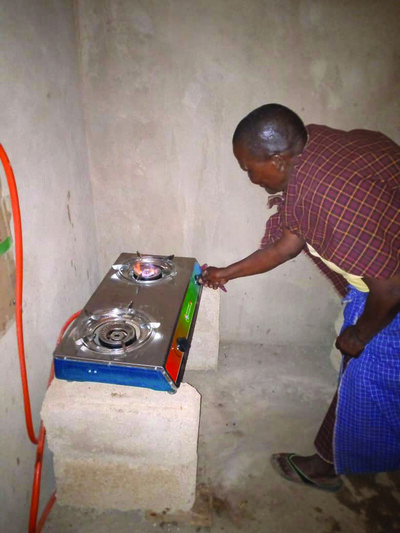
The fluctuation of prices for bricks, cement, wires, and iron bars makes certain models expensive for the region. Models such as the IBC tank digester used in the U.S. may cost up to $350. However, models such as the tubular digester used in the East African region require few materials. One instrumental resource readily available in the area is durable plastic, which is used to create the tubular shape that will eventually inflate with gas as the process of digestion occurs. Other materials include cement, sand or gravel, pipes, and a stove burner, all of which are locally available in rural areas of Tanzania.
Charles is now the lead trainer in an ECHO Tanzania initiative on biogas through one-day training programs, where he and other ECHO staff bring together mostly youth from the surrounding villages to train them on biogas and its benefits. Through practical and theoretical training, the program teaches youth how to be technicians, build their own business, produce organic fruits and vegetables by using bioslurry, and become ambassadors for biogas.
As the communities continue to learn more about biogas methods and models, they can start gathering materials to build their own. Charles’ hope for this program is that as the youth become familiar with the technology, they will spread the word about how biogas can improve rural livelihoods.
“If they travel to a different area, they have a chance to tell people how to live a good life here and share information about biogas,” Charles said.
Now, other young people have the same desire to have their own biogas digesters as Pastor Elirehema had when he was a boy. Only this time, it is not just a dream.


By: Anna Pearson
When the neighbor’s buffalo invaded their rainwater catchment pond, Michael Brant, his wife Mindy, and their farm staff were out of clean water. Fortunately, Michael knew there was a solution – they were not out of luck.
Michael, who runs an organic farm in Laos, had first learned about the four-barrel water filter design while searching for low-cost filters on YouTube. Months later, Michael and Mindy were excited to find out they could make their own when they visited the ECHO Asia Small Farm Resource Center for a tropical agriculture course. They knew they needed it on their farm.
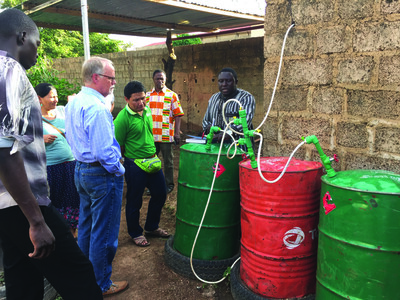
The four-barrel water filter system begins with a gravel pre-filter, then treats the water with a slow sand biofilter and then a biochar absorber before being stored in the final barrel. The bio-sand filters have a biological layer on top of the sand, and an aerobic and oxygen-loving layer to consume the bad microbes. This biological filtration keeps things like protozoa, cysts, and other organisms that cause sickness out of the water.
Originally developed by network partner Josh Kearns of Aqueous Solutions and identified by the team, biosand water filters are the most commonly used model. The four-barrel system adds an extra step to filter out chemical contaminants with the biochar barrel, which can absorb mercury, pesticides, acidic gasses, ozone, and nitrogen oxides out of the water.
According to the United Nations – which currently has 17 Sustainable Development Goal sit developed in 2015 and hopes to achieve globally by 2030 – 829,000 people die annually from diseases directly attributable to unsafe water, inadequate sanitation, and poor hygiene practices. Billions of people lack access to these basic services.
“You’ll get sick from drinking dirty water, illnesses like diarrhea — but you don’t notice the chronic long-term impacts of drinking contaminated water, which would be from those chemical contaminants you’re ingesting,” Elliot Toevs, ECHO’s Appropriate Technology Manager said. “You might not notice those impacts until 30 years later.”
Biochar filters are similar to the activated carbon filters that are used in common household items such as water pitcher filters or refrigerator filtration systems. Since this four-barrel system was introduced to ECHO in 2017, training on how to build it has picked up with the high demands for clean water solutions.
Although Michael was able to chase off the buffalo to another water source, he knew they would be back. The four other individuals living and working on the farm needed the water for household use as well as watering the garden and fruit trees. The end of the dry season in Laos meant low water levels full of sediment, which were stirred up by the buffalo, as well as the animals making the pond their personal bathroom.
“I was both disgusted and amazed at the same time,” Michael said. “These animals were simply doing what God designed them to do, but we were so dependent on this pond that I didn’t care how happy they seemed.”
In order to get a clean water source, they needed to dig a well. They decided to use the water filter system in the meantime. Michael finished the plumbing and built an elevated tank stand, finishing the project in three weeks — just enough time for the filter to help clean their water supply until the well was drilled. Their new filter cleaned the water and made it usable again.
Weeks later usable well water was found 37 meters down, and the Brant’s farm water was safe from the buffalo. The ECHO water filtration system continues to be used in addition to the well, filtering the well water for use at the farm. “The filtration system is a massive improvement for our farm,” Michael said. “It will serve us for years to come.”
The Brants hope to teach low-cost water filter designs outside of their farm and have gained confidence and hope from the tools and techniques they learned while at ECHO.
In addition to making their own biochar and water filter, Michael and Mindy have taught their farm employees how to make pesticide from tobacco and test germination using ECHO’s resources. They intend to start training in their local village to not only be an organic farm but also a resource for community outreach.
“Because of ECHO, we learned about building this four-barrel biochar water filter and what we can do here in our village,” Michael said. “We have the experience now.”
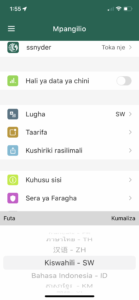
The ECHOcommunity Mobile App allows missionaries and development workers to download agricultural resources when the internet is available and then use and share those resources when in remote locations.
We are excited to announce that the app is now available in 11 languages: English, French, Spanish, Swahili, Thai, Haitian Creole, Vietnamese, Burmese, Central Khmer, Indonesian, and Chinese.
More valuable resources are being added each day. Please share this free resource with anyone you know who could benefit.
Find out more about the ECHOcommunity Mobile App by visiting http://edn.link/ema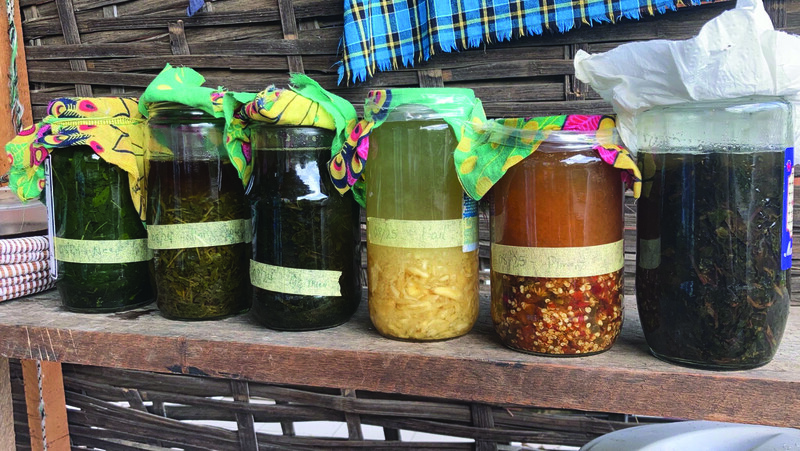
After church on a Sunday afternoon, Grace Brinsfield is found hunched over a bucket of soapy water. An hour into her laundry, a pile of dirty clothes still sits beside her. She is only about halfway done with her load. Nearby, a group of middle school girls wander around, bored, looking for something to do. They spot Grace glancing over her shoulder at her never-ending pile.
Without saying a word, they walk over to her, place their hands in the bucket of soapy water, and begin doing Grace’s laundry beside her. In 10 minutes, all of her clothes are washed.
This is just one of many examples of “Teranga” that Grace experienced while in Senegal during her extended field experience – a cultural norm of abundant hospitality and accommodation, as Grace explains it — something she was not used to but is grateful for.
A Personal Faith
Grace’s faith became more personal when she went to college and was confronted with personal convictions. Growing up involved in the church, Grace struggled with sin because she knew it was wrong. She found it easy to go astray in the college environment.
After joining Baptist College Ministries, Grace went on her first immersive cross-cultural experience in Cambodia where she taught English to high school students. That was where she learned that church planting is a long-term commitment.
“Just after the one-month mark we were already halfway through, but they were just starting to trust us and open up to us,” Grace said.
Grace left Cambodia considering international missions as something she would want to pursue long-term. After graduating college in 2020 amidst the COVID-19 pandemic, she was left with one big question; How do ministry and agriculture go together?
Growth While at ECHO
After getting a recommendation, Grace applied to the ECHO Internship for the summer of 2022. Grace was assigned to take care of the Monsoon garden, acquiring knowledge, techniques, and relationships that would eventually be of support to her in Senegal.
About a month after the conclusion of her internship in Fort Myers, Grace took the opportunity to go on the extended ECHO field experience which supports interns to apply what they learned in Florida in the developing world with partners. This brought her to Senegal, West Africa, where she worked on the BeerSheba Project for six months.
On the farm, Grace spent her time breeding a Senegalese chicken that is well-suited for the climate, testing various plant-based and farm-made pesticides as overnight seed soaks to prevent millipedes from eating young plants, and woodworking a winnower for seed banks using a design she learned about while in Florida.
Senegal is made up of about 95% Muslims, 5% Catholics, and is 100% animistic. Grace quickly realized there were a number of unreached people in Senegal, meaning certain ethnolinguistic groups do not have the people or resources to share the gospel with them. This is why outsiders were often needed – to help mobilize locals to go to other unreached contexts.
Grace was invited to a local Christian’s house for Bible discussion and Ataya, a Senegalese tea. The conversations that took place had to be translated three times (English, Pular, and Wolof) for everyone to get the message. Despite the language barrier, the group had warm fellowship and prayer.
“One of my worries when coming to Senegal was if I would find close Christian relationships here, and the Lord has blessed me abundantly with the spiritual family I have found,” Grace said.
The next four years
While in Senegal, Grace met an American couple receiving training at Beersheba that has been in Senegal for 20 years. The family welcomed Grace right away, and as she spent more time with them, she decided she wanted to be mentored by them long-term. Upon arriving back home to Maryland, Grace was hired as an apprentice for their new agriculture training project in Eastern Senegal to work to improve farmers’ standard of living.
She will also be joining their sending organization, which has seen spiritual growth in Senegal over the years. Her focus will be on indigenous church planting.
Grace completed her training in August and will begin her 2-year apprenticeship in early 2024.
“I’m grateful that ECHO led to this connection,” she said. “I was especially feeling like I needed to have what’s next figured out and the Lord answered my prayers by providing a connection and people who I really respect and have a similar heart and mindset related to holistic missions and agriculture.”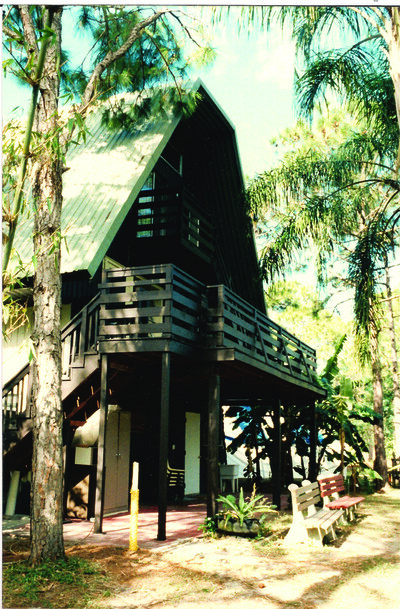
When ECHO began work in Florida, one of the first buildings to be constructed was the A-Frame, completed in the 1970s by United Methodist Volunteers. This building was the heart of ECHO’s ministry throughout the 1980s, housing offices, the Seed Bank, and small apartments for the interns and Dr. and Mrs. Price.
Most recently, the A-frame was retrofitted to offer a dormitory on the bottom floor and a gathering place upstairs for meals during weeklong courses for trainees as they spend time learning at ECHO.
The A-frame was reorganized and redeveloped several times to meet ECHO’s needs over the years, but the small upstairs kitchen was an obstacle for various groups and ECHO functions.
Food is at the heart of ECHO’s agricultural mission. If we grow the healthiest crops in the most creative and sustainable ways, but the foods don’t make it to local families, then food is wasted. If crops are grown but cannot be carried to market, they will not improve the livelihoods of the ones who grew them or the nutrition of the consumer. Teaching those who come to ECHO about the interconnectedness of growing and eating is a vital component of ECHO’s ministry.
We are excited for the next era of the A-Frame! Work has begun to remodel the building to include a high-capacity downstairs kitchen — making cooking and cleaning for groups more efficient and cost-effective. The second floor will offer bunkhouse-style accommodations for larger groups who want to serve and learn but do not currently have space at ECHO’s campus. This amazing structure has proven its robustness over the years but needs a major overhaul to continue to serve those who come to ECHO well for the decades to come. We have started that process with much of the framing work being done by ECHO’s amazing volunteers and funds committed by passionate donors like you.
However, to finish the project and to steward these donations well, we are looking for donations of used (but excellent condition) kitchen fixtures, cabinets, and appliances that have a long life in them to serve ECHO’s mission! We want to ensure that as much of the funds you donate to ECHO go towards our missional program as possible, and to that end, we could also use donations for items that we need but don’t want to divert funds toward. In addition to donations for kitchen items, we also need some items like a used heavy-duty truck, skid steer, or sedan.
Please let us know if you or anyone you know would be interested in meeting these specific needs and launching ECHO Florida into this renewed mission.
By: Talia McWright
Throughout the work week, David Erickson would pause, leave his iPhone on his desk, walk up the dark wooden spiral staircase of the Price Center and spend time alone, reflecting and recharging with God. Freeing his mind from the potential distractions of the work, Erickson opened himself to God’s leading each day.
Erickson, the President/CEO of ECHO for the last seven years, retired from the role in September of 2022. He began work with the organization as a consultant, which then grew into a supportive executive role. Receiving the title of CEO was an unexpected blessing for Erickson. Now, years later, he is faced with saying goodbye.
In his work, Erickson has supported the development of ECHO’s impact centers in Asia, East and West Africa, along with all aspects of the organization that enhance training and outreach. A large portion of his efforts consisted of managing partnership opportunities with other national and global organizations. He embodies the meaning of personability in his relationships with supporters and partners, often making in-person visits. Valuing ECHO interns, he encouraged the reorganization of the internship program that would multiply their spiritual and practical growth. Through his leadership, ECHO increased the number of direct trainees globally to more than 6,500 per year. Seed banks in Thailand, Tanzania, and Florida are stronger, more relevant, and able to share seeds across the globe. Hundreds of agricultural resources were published including Asian language books, the first e-book, and more than 1,000 training videos. ECHOcommunity has grown to offer valuable tools such as the Green Manure Cover Crop online selector tool and the ECHOcommunity mobile app. Under his leadership, ECHO weathered Hurricane Irma and the Coronavirus pandemic. Pivoting within COVID policies, ECHO hosted multiple virtual training events, continuing to meet resourcing needs around the globe. Invariably reflecting recognition to God, Erickson honors his work as the work of the Lord.
“God with a team could do everything I couldn’t,” Erickson said. “All of that together could bring us to something much closer than what I had envisioned and bless and benefit a whole lot more people.”
Building upon the foundation of ECHO, Erickson has sought to acknowledge the responsibilities of his role. Taking on the duties of a faithful steward, he has leaned on God in investing in the lives of others. Purposeful in his work, He was always seeking the potential for more ways to amplify increased food security and quality of life opportunities globally. Erickson recognized the privilege of his position and was empowered by the collective effort of the ECHO team.
“Meeting the missional goals of ECHO equates to profound and life-changing development in the lives of men and women around the world and means opportunity for their children,” Erickson said. “I am so thrilled about that.”
Erickson credits much of ECHO’s success to the global community of staff and volunteer members whose work advances ECHO’s mission. An introspective introvert at heart, Erickson’s deep appreciation for connection ensures he acknowledges the values and attributes of others. His humility and authentic, attentive spirit have positively impacted members of the ECHO community and beyond.
“There are so many extraordinary gifts that our staff have and it’s clear to me that the mission of ECHO requires all of them,” Erickson said. “They often inspire and remind me that we all need to be part of a community. The people on ECHO staff around the world care for, encourage, and support each other in remarkable ways.”
Erickson’s presence in his role will be greatly missed by the ECHO community. Colleagues that work closely beside him, shared some of the significance his character has had in their work environment.
“David is precious,” Executive Assistant, Kristen Musko said. “I’ve never worked for anyone quite like him before. His love for the Lord and others shines through in every aspect of his life. It’s not often that you meet someone so gifted, yet so very humble and kind. I believe this is because he knows the gift-giver and seeks to give Him all the glory. He fosters every relationship with an overarching element of pastoral care. He and Jenny will be deeply missed.”
“David is one of those significant people that my life has intersected with,” ECHO COO, Tim Albright said. “If nothing else I can take blessing in the deep richness of that. He has brought a unique perspective, experience and many talents that make him highly qualified for the work he’s done. His unbelievable giftedness will be deeply missed, not only by me, but by ECHO as a whole.”
For Erickson, the future is in God’s hands, and he is hopeful about what’s to come. “ECHO was a manifestation of God’s goodness and grace and an affirmation that he has a bigger purpose for us,” Erickson said. “God is the ultimate good steward and he has plans and purposes for the future of ECHO.”
As ECHO welcomes incoming CEO, Dr. Abram Bicksler, Erickson will work closely by his side for the next few months. Spending this time to walk with Bicksler, Erickson is delighted to give insight and advice as he passes along the role. “My advice to Abram is to bathe everything in prayer and recognize that ECHO is first and foremost God’s work,” Erickson said. “Trusting that truth is profoundly freeing. I would pray for humility and gratitude to recognize the privilege he’s been given.”
Erickson’s leadership will be missed by many at ECHO. The effects of his work continuously reverberate and create lasting impacts globally. ECHO celebrates the 12 years of service he selflessly gave to the community, wishing him and Jennifer blessing and comfort in their future. As ECHO launches this new chapter, we hold close the wonderful influence of Erickson in the continuation of fulfilling our mission. Thank you David, for all of your profound contributions, and for modeling the love of Christ in your humble leadership here at ECHO.
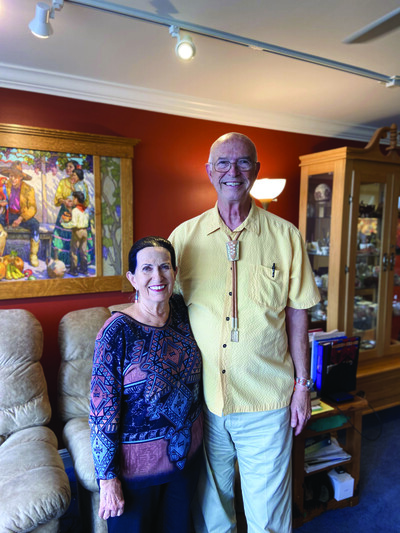
The stories are what have kept Kirk and Jan Gulledge connected to ECHO for decades.
“I love reading about how lives are being changed,” Jan said.
The Gulledges found ECHO after doing short-term missionary work overseas in the 1980s. Kirk wanted to know more about agriculture in Central America, so he did some research and stumbled upon ECHO. He wrote inquiry letters to ECHO staff to learn more about what they did. This was just the beginning of his passion and interest.
Kirk and Jan first visited ECHO’s Global Demonstration and Research Farm in 1996 after they moved to Florida. The farm was small back then, but they were very impressed by the tour. Right away, they wanted to know more and get involved.
“We became interested more and more about what ECHO was doing globally,” said Kirk.
The Gulledges had no agricultural experience, but Kirk explains, “We could see the potential impact that ECHO could make and that made a lot of difference to us.”
Kirk got an even deeper look into the work ECHO was doing by serving on the Board of Directors for ten years, beginning in 1999. He saw examples of how techniques taught by ECHO, like seed saving or various agricultural methods, change the lives of farming families.
Jan is just as passionate about the mission and heart of ECHO’s work. Her face lights up and you can hear the excitement in her voice when she talks about ECHO.
“It’s all about that old saying, give a man a fish and he’ll eat for a day, but teach a man to fish and he can eat for a lifetime. We feel like ECHO is doing that in a very good way,” Jan said.
People taught by ECHO share what they learn with others, spreading new information, techniques, or methods. The lives of small-scale farmers all over the world are positively impacted by this chain reaction that starts with ECHO. The Gulledges saw this and wanted to support the multiplying impact.
“We like the idea that we can make a difference by supporting an organization that is training people and spreading that information,” Jan said.
The Gulledges carefully consider how they can maximize their contribution. With a background in business, Kirk recognizes the value of faithful, sustaining support so they decided to become monthly donors. They also say that giving to ECHO helps them stay focused on what matters as followers of Christ.
“This keeps us aware that the rest of the world really is in a different situation than we are. This helps us to keep focusing on what is important,” Kirk said.
After years of supporting ECHO’s mission, the Gulledges decided to establish a charitable gift annuity with ECHO. This type of gift provides the Gulledges with a fixed-rate payout during their lifetime. After their passing, the remaining balance will help ECHO to continue providing lasting hunger solutions.
“We wanted some additional income, but at the same time, wanted to benefit ECHO,” Jan said.
The Gulledges have continued to keep their eyes and hearts open to how God is leading them to multiply their impact.
Reading through a newsletter last winter, they saw that ECHO Asia was hoping to convert a covered parking area into a multi-purpose training space and needed to install additional restroom facilities for staff and guests.
“The potential of converting an existing space for dual use really caught our eye,” Kirk said. “We wanted to help make that possible for trainings at ECHO Asia.”
In June, ECHO Asia held its first training in the new space, hosting a team that serves vulnerable children and underdeveloped communities for a one-day ‘On-Farm Feeds Training Workshop’. The staff sent pictures and described how even with a monsoonal downpour that day, the team was able to lecture with powerpoint presentations and make on-farm pig and chicken feeds all in the space — without getting wet!
That’s a pretty remarkable story — one that started with the Gulledge’s watchful and thoughtful eyes toward how they can continue the ECHO effect.